
Israel's National Security Council (gov.il) currently rates the UAE at warning level 3 ("medium threat") and recommends avoiding non-essential travel. This is a recommendation, not a legal ban — travel to the UAE is fully legal, and the UAE is not among the countries Israeli citizens are legally barred from entering (Iran, Syria, Lebanon, Iraq, Yemen). The decision and responsibility rest with each traveler, per the NSC's own guidance.
Checked directly against gov.il on 25.9.2026. Warning levels can change at any time — check the binding, up-to-date status at the official link before any decision.
Check the latest update on gov.ilThe United Arab Emirates has become a leading destination for Israelis — a short direct flight, no visa and guaranteed sunshine. Dubai offers the Burj Khalifa, endless shopping, beaches and desert — while Abu Dhabi offers the stunning Sheikh Zayed Mosque, the Louvre Abu Dhabi and quiet elegance. Pick a city 👇
Top cities in the United Arab Emirates
For each city — flights, hotels and deals. Direct flights to Dubai (DXB) and Abu Dhabi (AUH).
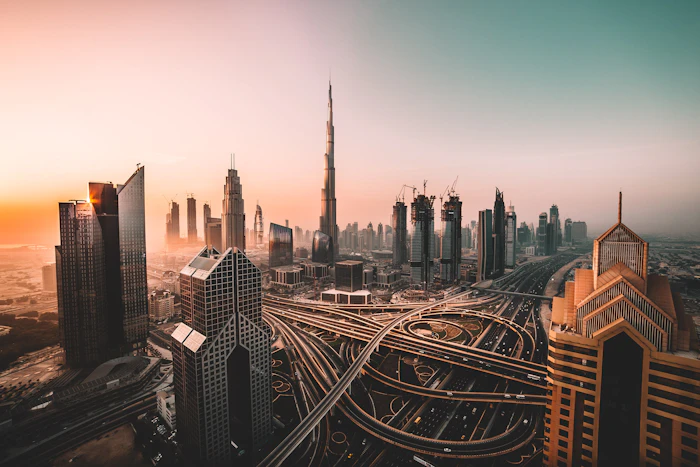 The dazzling city
Dubai
The Gulf's city of wonders — Burj Khalifa, endless shopping, beaches, a desert safari and water parks. Luxury at every price point.
Full Dubai guide ←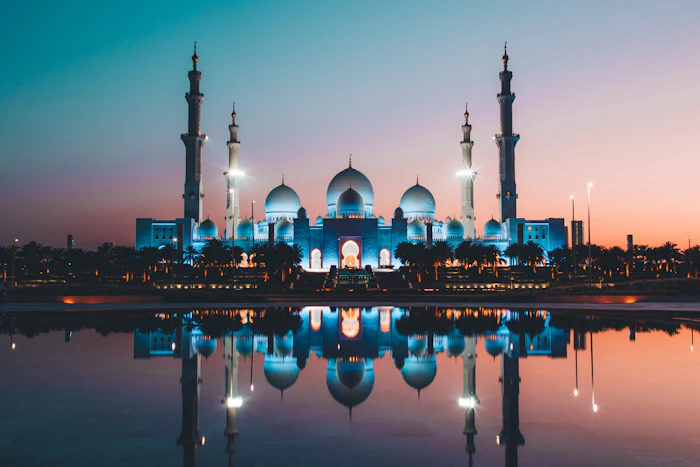 The cultural capital
Abu Dhabi
The cultural capital — the stunning Sheikh Zayed Mosque, the Louvre Abu Dhabi, Ferrari World and quiet beaches. Elegance and calm.
Full Abu Dhabi guide ←Why the United Arab Emirates?
In recent years the United Arab Emirates has become one of the most sought-after destinations among Israelis, and not by accident: a short direct flight, sunshine almost year-round, and a rare combination of dizzying modernity, luxury, shopping, desert and sea. The two main cities offer very different experiences: dazzling Dubai — the capital of skyscrapers, shopping and nightlife — and the capital, Abu Dhabi, calmer and more cultural. You can choose one or combine both in a single trip, since they're only about a ninety-minute drive apart. For the full guides, see the Dubai guide and the Abu Dhabi guide.
Entry, passport and a note on visas
Per the UAE Ministry of Foreign Affairs, holders of a valid biometric Israeli passport (valid for at least six months) are visa-exempt, as of an October 2021 update. That said, conflicting information has also been published by visa service providers, and requirements may change. It is essential to check the current status with the official source (the UAE Ministry of Foreign Affairs or the Israeli consulate) before every trip. Note: entry with a laissez-passer travel document is not possible, and the passport must be valid for at least six months.
Sources: UAE Ministry of Foreign Affairs (mofa.gov.ae) · Israel's Ministry of Foreign Affairs consular services, gov.il · checked 03/06/2026.
Dubai or Abu Dhabi — what suits you?
Dubai is the classic choice for a first UAE trip: a fast pace, skyscrapers, huge malls, nightlife, water parks and desert safaris. Abu Dhabi is calmer and more elegant, with an emphasis on culture and architecture — the Sheikh Zayed Mosque, the Louvre Abu Dhabi and the Qasr Al Watan palace. Many travelers combine both: a few days in Dubai for energy and shopping, and a day or two in Abu Dhabi for culture and calm. The two cities are connected by a highway and bus lines, and moving between them is simple.
When to fly
The most pleasant season is November through March: comfortable weather, sun-filled days and pleasant nights — perfect for beaches, pools and outdoor activity. It's also peak season, so prices and crowds are higher. Summer (June–September) is very hot and humid, sometimes above 40°C, but it suits travelers planning a hotel-and-mall vacation with air-conditioned water parks — and typically offers lower prices. Also note Ramadan, during which some restaurants operate on different hours and certain public-conduct rules apply.
What not to miss in Dubai
- Burj Khalifa — the tallest building in the world, with observation decks; book tickets in advance for sunset.
- Dubai Mall and the Dubai Fountain — one of the world's largest malls and an evening fountain show.
- Old Dubai — the Deira and Bur Dubai neighborhoods, the gold and spice souks, and crossing the Creek by abra.
- Palm Jumeirah — the artificial palm-shaped island, with hotels and restaurants.
- Desert safari — dune bashing, camels and a desert sunset.
- Marina and JBR — a beachfront promenade and restaurants.
For full detail, itineraries and where-to-stay recommendations — see the full Dubai guide.
What not to miss in Abu Dhabi
- The Great Sheikh Zayed Mosque — one of the most impressive mosques in the world, free entry with modest dress.
- The Louvre Abu Dhabi — an international art museum under a stunning architectural dome.
- Qasr Al Watan — the presidential palace, open to visitors.
- Yas Island — Ferrari World, Warner Bros. World, a water park, and the Formula 1 circuit.
- The Corniche — a long beachfront promenade for cycling and walking.
For full detail — see the full Abu Dhabi guide.
Food, kosher and tradition
The United Arab Emirates offers a rich international cuisine — from fine dining to street markets — alongside familiar, delicious Arab-Levantine food (hummus, grilled meats, pastries). Since the Abraham Accords, a kosher scene has developed in the UAE, including local supervision bodies, restaurants and some hotels offering kosher food on request. The offering is still evolving, so it's advisable to confirm and pre-book with the hotel or provider. Alcohol is served at licensed venues (mainly hotels and restaurants), and is not sold freely everywhere.
Quick practical info
- Currency: the UAE Dirham (AED), pegged to the dollar. Credit cards are accepted almost everywhere.
- Language: Arabic is official, but English is spoken almost everywhere.
- Transport: Dubai has a convenient metro, taxis and ride-hailing apps; Abu Dhabi relies mainly on taxis and rental cars.
- Dress: casual in tourist areas, modest at religious sites and in public places.
- Electricity: UK-style plug (Type G), 230V — bring an adapter.
- Climate: desert — sunshine most of the year, very hot summers.
Sample itinerary — Dubai + Abu Dhabi in 5 days
- Days 1–3 — Dubai: Burj Khalifa and Dubai Mall, Old Dubai and the souks, a desert safari, and a beach/marina day.
- Days 4–5 — Abu Dhabi: the Sheikh Zayed Mosque, the Louvre Abu Dhabi, and Yas Island for the parks — or back to Dubai for last-minute shopping.
Weighing sun destinations? Compare with nearby Cyprus or Greece, and check more ideas on the deals page.
How much does it cost? A budget approach
The United Arab Emirates suits a wide range of budgets — from hostels and boutique hotels to luxury chains — but flight, hotel and attraction prices vary a lot by season and demand. So we don't quote fixed figures, and recommend checking a live price: flights via the search link on this page, hotels on Booking for your dates, and attractions in advance via Klook. A few principles for saving:
- The shoulder months (April–May, September–October) are cheaper than the winter peak season.
- Booking popular attractions in advance (Burj Khalifa, parks) saves time in line and sometimes money.
- Combining public beaches, malls and free shows (the Dubai Fountain) helps balance a budget.
- A local eSIM package booked ahead saves on roaming costs — see the link further down the page.
Unique experiences worth knowing
Beyond the main sites, the United Arab Emirates has a range of experiences hard to find elsewhere — and many are family-friendly:
- Ski Dubai — an indoor ski resort inside a mall, with real snow even when it's 40°C outside.
- Global Village — a seasonal culture-and-entertainment park with pavilions from around the world (active mainly in the cooler season).
- An evening dhow cruise — dinner on a traditional wooden boat along the marina or the Creek.
- Water parks — Aquaventure on the Palm and Yas Waterworld in Abu Dhabi.
- A desert experience — camel rides, sandboarding and an overnight Bedouin camp under the stars.
Getting around, safety and conduct
The United Arab Emirates is considered a very safe and clean destination, including for families and solo travelers, with a low crime rate and excellent infrastructure. That said, it is a Muslim country with codes of conduct worth respecting: avoid public displays of affection, dress modestly outside beaches and pools, and ask permission before photographing local people — especially women. During Ramadan, avoid eating, drinking and smoking in public during fasting hours. Getting around: in Dubai the metro is convenient and cheap and connects the main attractions; beyond that, licensed taxis and ride-hailing apps are convenient. In Abu Dhabi, getting around relies mainly on taxis or a rental car. Between the cities you can drive a rental car (about ninety minutes) or take an intercity bus. It's worth arranging a local eSIM package in advance for easy navigation and booking rides.
Frequently asked questions — United Arab Emirates
Is the United Arab Emirates safe for families?
Do Israelis need a visa for the United Arab Emirates?
How long is the flight from Tel Aviv to Dubai?
When is the best time to fly?
What is the currency in the United Arab Emirates?
Is there kosher food in Dubai and Abu Dhabi?
What is the dress code, especially at religious sites?
How many days should you set aside?
Before you fly — everything worth arranging in advance
A consolidated list of services worth arranging before your flight. Prices vary by provider and date — always confirm the final price with the provider at booking time.
Last updated: September 2026 · Information may change — check entry requirements, visa, flight and price details with official sources before booking.