
Hungary is one of the favourite destinations for Israelis — a short direct flight, low prices and a single city that has it all: Budapest. Along the banks of the Danube you'll find the magnificent Parliament, the Chain Bridge, the Széchenyi thermal baths, the Castle District and lively ruin bars. Perfect for a long weekend or a romantic getaway.
The main destination in Hungary
Flights, hotels and deals. Flights arrive directly in Budapest (BUD).
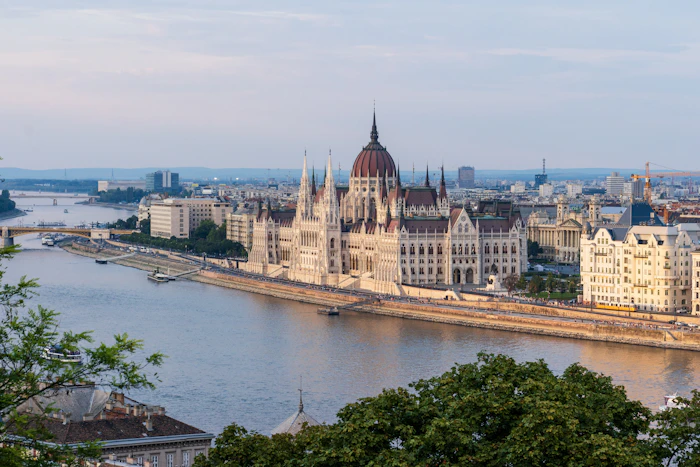 The capital
Budapest
One of the most beautiful cities in Europe — the Parliament on the Danube, the Chain Bridge, the Széchenyi baths, the Castle District and ruin bars. Romantic, cheap and full of life.
Full Budapest guide ←Why Hungary?
Hungary is a perfect gateway to Eastern Europe for Israeli travellers: a short direct flight, comfortable prices relative to Western Europe, and a single capital — Budapest — that concentrates almost everything worth seeing. The Danube splits the city in two: hilly, quiet Buda in the west, and bustling, flat Pest in the east, connected by lit-up bridges. Most sights can be covered on foot or by cheap public transport, which makes Budapest especially well suited to a short city break, a couples trip, or a first holiday in Europe. For anyone wanting to go beyond one city, Hungary borders conveniently onto Czechia and Romania for a combined trip.
Getting there and entry requirements
A direct flight from Tel Aviv (TLV) to Ferenc Liszt Airport in Budapest (BUD) takes about three and a half hours, with several airlines operating the route through the week. Prices and availability vary a lot by date, holidays and promotions — so we don't quote a fixed price; check a live price via the search links on this page. On visas: Hungary is an EU and Schengen member, and holders of a valid Israeli passport are exempt from a visa for tourist stays of up to 90 days in any 180-day window. Note — from the last quarter of 2026, a digital entry authorisation called ETIAS is planned to take effect, to be submitted online before the flight (it is not a visa, but an entry authorisation). Launch dates have slipped before, so check the current status close to your travel date.
Sources: travel-europe.europa.eu (ETIAS — planned launch Q4 2026) · European Commission · checked 03/06/2026.
When to fly
The most comfortable seasons are spring (April-May) and autumn (September-October): pleasant weather, fewer tourists and shorter queues. Summer (June-August) is warm and lively, with festivals, parties on Margaret Island and evening Danube cruises — but also crowds and higher prices. Winter is cold (sometimes below zero) but especially magical: the thermal baths run even in the cold, and in December Christmas markets open around Vörösmarty Square and St. Stephen's Basilica.
What not to miss in Budapest
Budapest is a city of water views, grand architecture and a unique bathing culture. The essentials:
- The Hungarian Parliament Building — one of Europe's most striking buildings, Neo-Gothic on the Danube bank. Worth booking a guided tour in advance.
- Széchenyi Baths — Europe's largest thermal spa complex, with outdoor pools that are enjoyable even in winter — plus the historic Gellért and Rudas baths.
- Castle District and Fisherman's Bastion on the Buda side — panoramic views over Pest and the Danube, next to Matthias Church.
- The Chain Bridge (Széchenyi Lánchíd) — the city's symbolic bridge, especially beautiful lit up at night.
- St. Stephen's Basilica — with an observation deck in the dome.
- The Jewish Quarter and ruin bars — led by Szimpla Kert, bars opened in abandoned buildings that became a symbol of the city's nightlife.
- The Great Market Hall (Nagyvásárcsarnok) and a Danube cruise — a great way to see the skyline.
This is just a taste — for a day-by-day plan, itineraries, ticket tips and neighbourhood recommendations, see the full Budapest guide.
Jewish Budapest and kosher food
Budapest has one of the oldest and largest Jewish communities in Europe, and a visit to the Jewish Quarter (District VII) is a meaningful experience for Israeli travellers. At its heart is the Great Synagogue on Dohány Street — the largest in Europe — alongside a Jewish museum, a memorial garden and the "Tree of Life". Kosher restaurants, bakeries and a Chabad centre operate in the area. Supervision and opening hours vary, so it's worth confirming in advance with the businesses before visiting.
Day trips from Budapest
If time allows, it's easy to leave the city for a day:
- Szentendre — a colourful artists' town on the Danube, about 40 minutes north of Budapest.
- The Danube Bend — the towns of Visegrád and Esztergom, with fortresses and river views.
- Eger — a baroque town and well-known wine region ("Bull's Blood").
- Lake Balaton — "Hungary's sea", a popular summer destination for beaches and wineries.
Hungarian food — what to try
Hungarian cuisine is rich and seasoned with paprika. Worth tasting: goulash (a rich meat soup), lángos (fried dough with toppings), chicken paprikash, and kürtőskalács (a sweet chimney cake). Note that many traditional dishes are meat- and fat-based — kosher or vegetarian diners will do best in the Jewish Quarter and at modern restaurants downtown.
Quick practical info
- Currency: Hungarian forint (HUF) — not the euro. Credit cards are accepted almost everywhere.
- Language: Hungarian; English is spoken in tourist areas and among younger people.
- Transport: a cheap, efficient network of metro, trams and buses; a day/multi-day pass pays off.
- From the airport: bus 100E runs direct to the centre (Deák tér) in about 40 minutes.
- Tipping: customary to leave about 10% in restaurants if not already included.
- Electricity: European socket (Type C/F), 230V — a European adapter is enough.
Torn between destinations? Compare with neighbouring Prague, with Cyprus for an especially short flight, or with Greece for a sun holiday. More money-saving ideas on the Deals page and the Tips guide.
A sample 3-day Budapest itinerary
A long weekend is enough to feel the city. Here's a sensible route by geography:
- Day 1 — the Pest side: Parliament (book a tour in advance), the Danube promenade and the "Shoes on the Danube Bank" memorial, St. Stephen's Basilica, and in the evening the Jewish Quarter and ruin bars.
- Day 2 — the Buda side: climb to the Castle District, Fisherman's Bastion and Matthias Church, views from Gellért Hill, then relax in the afternoon at Széchenyi or Gellért baths.
- Day 3 — markets and a cruise: the Great Market Hall, shopping on Váci utca, a midday or sunset cruise, finishing with a walk across the Chain Bridge.
For a more detailed itinerary with times, transport stops and interest-based recommendations, see the full Budapest guide.
How much does it cost? A budgeting approach
Budapest is considered one of Europe's best-value destinations, and overall price levels run lower than in Western Europe. That said, flight, hotel and attraction prices change constantly with season, demand and promotions — so we don't quote fixed amounts. The right approach is to check a live price: flights via the search link on this page, hotels on Booking for your dates, and attractions in advance via Klook. A few principles that help save money:
- Midweek and shoulder months (spring/autumn) are cheaper than weekends and summer.
- Residential neighbourhoods outside the immediate centre are usually better value and still reachable by metro.
- A multi-day transport pass saves money over single tickets.
- Booking popular attractions in advance avoids queues and is sometimes cheaper.
More comparison options and general savings tips are gathered on the Tips page and the Deals page.
Safety, communication and language
Budapest is considered a safe, comfortable city for travellers, including families and independent travellers. As in any large tourist city, watch for pickpockets in crowded areas and on public transport, and use licensed taxis or recognised ride-hailing apps. The official language is Hungarian — a language unlike its neighbours' — but English is spoken in tourist areas, hotels and many restaurants, especially among younger people. To stay connected without high roaming costs, consider booking an eSIM package in advance (see the eSIM link further down this page) — convenient for navigation, bookings and staying in touch. It's also worth keeping a digital copy of your passport and making sure it's valid for at least six months beyond your travel date.
FAQ — Hungary
Do Israelis need a visa for Hungary?
How long is the flight from Tel Aviv to Budapest?
What's the currency in Hungary?
When's the best time to fly to Hungary?
Is there kosher food in Budapest?
Before you fly — everything worth arranging in advance
A consolidated list of services worth arranging before your flight. Prices vary by provider and date — always confirm the final price with the provider at booking time.
Last updated: September 2026 · Information may change — please verify entry requirements, visas, flights and prices with official sources before booking.