
The Czech Republic is a classic European destination for Israelis — a direct flight from Tel Aviv and one city that has it all: Prague. Along the banks of the Vltava you'll find Prague Castle, Charles Bridge, the Astronomical Clock in the Old Town Square, the historic Jewish Quarter (Josefov) and Gothic and Baroque architecture. Perfect for a long weekend or a city break.
The main destination in the Czech Republic
Flights, hotels and deals. Flights arrive directly into Prague (PRG).
📖 The complete Prague guide for Israelis 2026
Flights, visa, attractions, the Jewish Quarter, accommodation, transport and eSIM — all in one place.
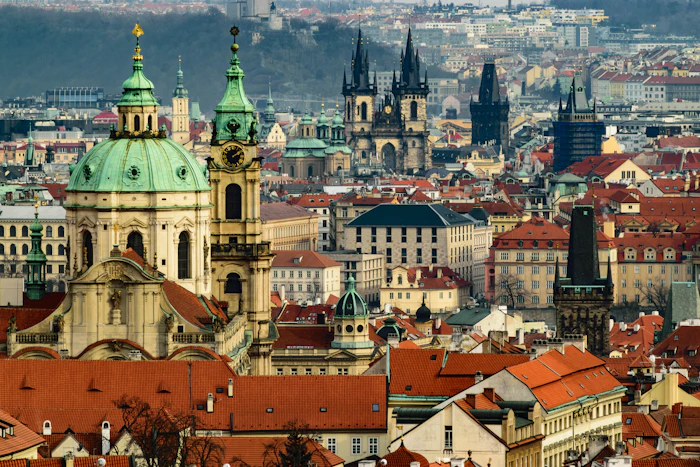 The capital
Prague
One of the most beautiful cities in Europe — Prague Castle, Charles Bridge, the Old Town Square and the Astronomical Clock, and the historic Jewish Quarter. A compact city you can explore entirely on foot.
The complete Prague guide →Why the Czech Republic?
The Czech Republic is a European classic, especially well suited to a city break: a direct flight from Tel Aviv, one of the continent's most beautiful historic centres, and comfortable prices relative to Western Europe. At the heart of the country stands Prague — the "City of a Hundred Spires" — split by the Vltava river, its intact Gothic, Baroque and Renaissance buildings having survived the 20th century. Most of the city's sights are within walking distance of each other, which makes it ideal for a long weekend, a couples trip, or a first holiday in Europe. Anyone wanting to add another destination can easily combine the Czech Republic with neighbouring Hungary.
Getting there and entry requirements
A direct flight from Tel Aviv (TLV) to Václav Havel Airport in Prague (PRG) takes about four hours, with several airlines operating the route. Prices and availability vary by date, holidays and promotions — so we don't quote a fixed price; check a live price via the search links on this page.
On visas: the Czech Republic is an EU and Schengen member, and holders of a valid Israeli passport are exempt from a visa for tourist stays of up to 90 days in any 180-day window. From the last quarter of 2026, a digital entry authorisation called ETIAS is planned to take effect, submitted online in advance (it is not a visa, but an entry authorisation). Launch dates have slipped before — check the current status close to your travel date.
Sources: travel-europe.europa.eu (ETIAS — planned launch Q4 2026) · European Commission · checked 03/06/2026.
When to fly
The most comfortable seasons are spring (April-May) and autumn (September-October): pleasant weather, good light for photography and fewer crowds. Summer (June-August) is warm and lively but busy with tourists, especially on Charles Bridge and in the Old Town Square. Winter is cold and sometimes snowy, but Prague under snow is a fairy-tale sight, and in December large Christmas markets open in the Old Town Square and Wenceslas Square.
What not to miss in Prague
Prague offers a rare concentration of historic sights within a single city centre:
- Prague Castle (Pražský hrad) — the largest ancient castle complex in the world, home to St. Vitus Cathedral, the Royal Palace and Golden Lane.
- Charles Bridge (Karlův most) — a medieval stone bridge lined with Baroque statues, especially beautiful at sunrise before the crowds.
- The Old Town Square and Astronomical Clock (Orloj) — one of the oldest working astronomical clocks in the world, with an hourly show.
- The Jewish Quarter (Josefov) — a unique concentration of historic synagogues and an ancient cemetery.
- Wenceslas Square and Petřín Hill — the heart of the New Town and a lookout tower with panoramic views.
- Beer culture — the Czech Republic is considered one of the world's great beer nations; historic breweries are part of the experience.
For a day-by-day plan, recommended itineraries, ticket tips and area-by-area accommodation advice, see the full Prague guide.
Jewish Prague and kosher food
Prague's Jewish Quarter, Josefov, is among the most significant Jewish sites in Europe. At its heart is the 13th-century Old-New Synagogue — the oldest still-active synagogue in Europe — alongside the Jewish Museum, the ornate Spanish Synagogue, and the Old Jewish Cemetery with its densely packed headstones. Kosher restaurants and a Chabad centre operate in the area. Supervision and opening hours vary, so it's worth confirming in advance with the businesses. Another site of real significance for Israeli visitors is the Terezín (Theresienstadt) camp north of Prague, open to visitors as a memorial site.
Day trips from Prague
- Český Krumlov — a perfectly preserved medieval town and UNESCO World Heritage Site, set on a river bend.
- Kutná Hora — a UNESCO site, home to the famous "Bone Church" in Sedlec.
- Karlovy Vary — an elegant spa town with mineral springs.
- Terezín — a Holocaust memorial site, especially meaningful for Israeli visitors.
Czech food — what to try
Czech cuisine is hearty and filling. Worth tasting: svíčková (beef in a creamy sauce), goulash served in a bread bowl, knedlíky (bread or potato dumplings), and trdelník — a sweet chimney-shaped pastry sold on every corner. Many dishes are pork- or beef-based, so kosher or vegetarian diners will do best in the Jewish Quarter and at modern restaurants downtown.
A sample 3-day Prague itinerary
- Day 1 — the Old Town: the Old Town Square and Astronomical Clock, the Josefov Jewish Quarter, and an evening walk along Charles Bridge.
- Day 2 — the Castle: climb to Prague Castle, St. Vitus Cathedral and Golden Lane, then descend through the Malá Strana district.
- Day 3 — the New Town and beyond: Wenceslas Square, Petřín Hill, and with an extra day — a day trip to Český Krumlov or Kutná Hora.
For a more detailed itinerary with times and transport stops, see the full Prague guide.
How much does it cost? A budgeting approach
Prague is considered good value in a European context, and overall price levels run lower than in Western Europe. That said, flight, hotel and attraction prices change constantly with season and demand — so we don't quote fixed amounts. The right approach is to check a live price: flights via the search link on this page, hotels on Booking for your dates, and attractions in advance via Klook. A few money-saving principles:
- Midweek and shoulder months are cheaper than weekends and summer.
- Accommodation slightly outside the historic centre is usually better value and still reachable by metro or tram.
- A day transport pass pays off compared with single tickets.
- Booking attractions in advance saves time in queues.
More savings tips for flights and hotels are gathered on the Tips page and the Deals page.
Safety, communication and language
Prague is considered a safe, comfortable city for travellers, including families and independent travellers. As in any major tourist destination, watch for pickpockets in crowded areas and on public transport, and use licensed taxis or recognised ride-hailing apps (some travellers report street taxis inflating fares). The official language is Czech, but English is spoken in tourist areas and many hotels. To stay connected without roaming costs, consider booking a local eSIM package in advance (see the eSIM link further down this page). Make sure your passport is valid for at least six months beyond your travel date.
Last tips before you fly
- Currency exchange: avoid street exchange kiosks offering poor rates and hidden fees; withdraw koruna from a recognised ATM or pay by card.
- Ticket validation: on public transport you must validate your ticket at the machine when boarding — inspections with fines are common.
- Advance tickets: for Prague Castle and major sights, book tickets ahead and arrive early, before the tour-group waves.
- Comfortable shoes: the city centre's streets are cobbled — comfortable shoes are a must.
Beyond Prague — more of the Czech Republic
Most Israeli visitors focus on Prague, and rightly so — but the Czech Republic has plenty to offer outside the capital, especially for anyone extending their trip or visiting a second time. Brno, the country's second-largest city, offers a young university atmosphere and lower prices. Plzeň is the birthplace of pilsner beer, home to a historic brewery. The South Bohemia region around Český Krumlov is full of castles, forests and rivers, and suits a relaxed countryside trip. Karlovy Vary and the other spa towns in the west of the country offer an elegant spa getaway. All of these can be combined by train or a rented car for a much fuller picture of the country — beyond the Old Town Square.
FAQ — the Czech Republic
Do Israelis need a visa for the Czech Republic?
How long is the flight from Tel Aviv to Prague?
What's the currency in the Czech Republic?
When's the best time to fly to the Czech Republic?
Is there kosher food and Jewish heritage in Prague?
How many days are enough for Prague?
How do I get from the airport to the centre?
Can the Czech Republic be combined with another country?
Is Prague suitable for families with children?
Before you fly — everything worth arranging in advance
A consolidated list of services worth arranging before your flight. Prices vary by provider and date — always confirm the final price with the provider at booking time.
Last updated: September 2026 · Information may change — please verify entry requirements, visas, flights and prices with official sources before booking.